(names changed)
23-year-old Durga, lives with her 7 family members in central Nepal. They make their living from farming.
Durga came into contact with PHASE Nepal Manbu Health post staff early in her pregnancy and completed all eight recommended Antenatal Care (ANC) visits before her expected date of delivery. Throughout her pregnancy, she adhered well to medical advice. She regularly took iron supplements, received the Tetanus-Diphtheria (Td) vaccine, and underwent routine ultrasound (USG) check-ups as recommended. Her health condition remained stable and satisfactory during all ANC visits, with no major complications detected.
Durga came to the PHASE Nepal Clinic complaining of labour pain. The PHASE staff conducted a physical examination and checked vital signs – all within normal ranges. Staff performed a per vaginal (PV) examination, which showed 6 cm dilation. They monitored labour progression and foetal condition every two hours which appeared normal (foetal heart beat 140 bpm). Staff also provided psychological support.
The examinations continued to be normal; however, Durga’s contractions were becoming abnormal. The PHASE staff discussed the mothers condition with her family, advising her to drink hot water and glucose water.
The patient was now fully dilated; however, foetal distress and abnormal contractions were noted. An intravenous line was established, and IV fluids were administered. The team continued close monitoring while awaiting delivery.
The foetal heart rate had dropped but the baby was delivered but was not breathing, prompting the staff to initiate resuscitation immediately. After 15 minutes, a heartbeat was restored, and by 20 minutes the baby’s condition had improved slightly with oxygen support.
The PHASE staff maintained close monitoring of both mother and baby. An ambulance was arranged to refer the new born to a higher-level facility.
The new born was initially referred to Arughat Hospital. Due to the severity of the condition, the baby was further referred to Gorkha Hospital and subsequently transferred to Kanti Children’s Hospital in Kathmandu for specialized paediatric care.
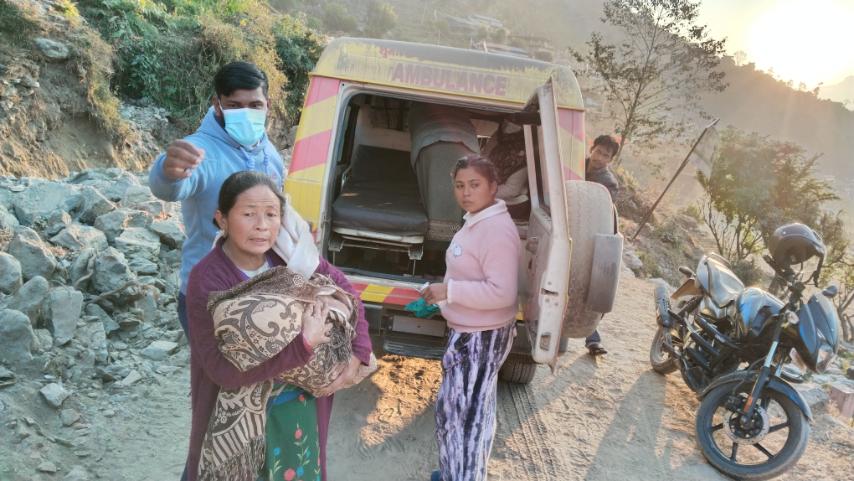
After receiving appropriate treatment, both mother and baby gradually recovered. The family has now returned home, and are in good health. Durga and her family expressed deep gratitude to PHASE Nepal and its dedicated staff for their timely intervention and lifesaving care. They acknowledged that such services are vital for remote communities like Manbu, where access to advanced healthcare is limited.
Skilled birth attendance, timely referral, and continuous maternal and new born care for improving health outcomes in rural settings is vital.
To save the lives like that of Druga and her baby set up a regular donation with PHASeEWorldwide www.phaseworldwide.org/donate
