(name has been changed)
Urmila is a 21-year-old pregnant woman she lives with her husband and mother-in-law in a small household of three. The family survives on subsistence agriculture and daily wage labour.
Her pregnancy was planned, and she attended all eight antenatal check-ups supported by PHASE. Her expected date of delivery was 1 July 2025 and she’d had a normal ultrasound screening on the new machine recently purchased by PHASE for the community.
On 4 July 2025, Urmila began experiencing labour pain. In the early morning of 5 July 2025 at around 3:30 AM, she arrived at the PHASE-supported Bichhya Health Post with complaints of abdominal and back pain. On assessment things were going well with the labour however by 6:30 AM, she was fully dilated, but her contractions began to weaken.
The PHASE medical staff provided hot drinks and oral glucose, but the contractions remained inadequate. The PHASE team immediately contacted the PHASE central office team and the district hospital doctor for guidance.
Following their advice, 5% Dextrose was administered, and by 11:00 AM, the membranes were ruptured. At this critical moment, electricity went out and the phone network collapsed, making further communication impossible. Urmila grew weaker, but the baby’s heart rate remained normal — a tense and high-risk situation.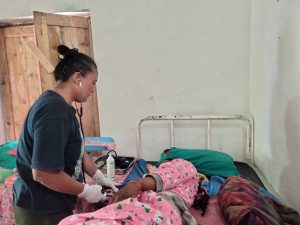
By 12:30 PM, contractions strengthened again, leading to the normal birth of the baby at 1:08PM on 5 July 2025. However, the newborn did not cry or breathe. In this emergency, the PHASE medical staff immediately initiated neonatal resuscitation using suction, bag-and-mask, and mouth-to-mouth breaths. After persistent effort, the baby began breathing and cried.
The baby weighed 3.5 kg. Urmila and her newborn were monitored closely for 24 hours and discharged on 6 July 2025 with counselling on breastfeeding, newborn hygiene, vaccination, perineal care, and danger signs. At the time of discharge, her husband expressed deep gratitude, saying:
“You saved my wife’s and child’s life. If PHASE was not here, both of them would have died.”
During home follow-ups, both mother and child were healthy.
This case highlights the vital role of rural health posts and trained health workers in saving lives in remote communities where electricity, communication, transport, and emergency referrals are often unreliable or unavailable.
To support families like Urmila’s please give to our Big Give Christmas Campaign this Christmas and have your donations doubled.
Thank you
